GED Test Score Range 2026: Passing Score, Chart, and College Ready Levels
The GED test score range is 100 to 200 for each subject. A score of 145 or higher is passing, while higher bands may be reported as College Ready or College Ready + Credit. This guide explains the chart, the difference between official and practice scores, and what to study next.

Quick Answer: What Is a Passing Score on the GED Test?
A GED score of 145 or higher in each subject is passing. The official GED test score range is 100–200 per subject, so there is not one combined percentage that can make up for a weak subject. Math, Reasoning Through Language Arts, Science, and Social Studies each receive their own score.
GED Test Score Range: The Official Score Chart
The current GED score scale uses four practical bands. This GED test scores chart describes the official score categories, but any college, training program, or employer may apply its own placement or credit rules. Treat the band as useful context and verify the specific policy before making an enrollment decision.
| GED score range | Official level | Practical next step |
|---|---|---|
| 100–144 | Below passing | Review missed skills, practice the weakest subject, and retest after targeted study. |
| 145–164 | Passing | Confirm the state or testing requirements, then plan the next subject instead of assuming all four are ready. |
| 165–174 | College Ready | Ask the school or program how it uses the College Ready level; local placement rules can differ. |
| 175–200 | College Ready + Credit | Check the institution's policy before assuming that college credit will be awarded. |

How the GED Scaled Score Works
The GED is scored by subject rather than as one large pass-or-fail average. You can pass Math and still need to complete Science, for example. This is why a useful score review names the subject, the score, the missed skill, and the next action instead of recording only an overall practice percentage.
There is no single total GED score that can compensate for a subject below 145. Keep the four subject results separate, because the score report and your study decision both depend on subject-level performance.
The official scaled score is also different from the number of questions you answered correctly. Test forms can vary in question mix and difficulty, so do not try to reverse-engineer an official GED score from a small online quiz. Use your practice result to locate gaps, then use official GED information or an official readiness check when you are close to scheduling.
GED Score Chart vs. Practice-Test Percentage
A practice percentage is useful for learning, but there is no universal conversion that turns “78% correct” into one official GED scaled score. Two practice tests can have different lengths, skills, and difficulty. A percentage can therefore be a local diagnostic without being a prediction of the score report you will receive.
| What you see after practice | What it can tell you | What it cannot prove |
|---|---|---|
| High percentage in one subject | That subject may be a good candidate for more timed review. | It does not guarantee an official scaled score or a passing result. |
| Repeated misses in one skill | Where to focus your next study block. | It does not mean the entire subject is weak. |
| Different percentages on different tests | That timing, question mix, or test length may be affecting the result. | It does not provide a safe percentage-to-score formula. |
What GED Score Should You Aim For?
The minimum official target is 145 in every subject. In practice, it is sensible to aim for a small cushion rather than treating one borderline result as proof that you are ready. Look for repeatable performance, fewer careless mistakes, and enough time to review flagged questions.
If you are close to the passing range and need a formal readiness signal, review the GED Ready practice test guide. GED Ready is different from a free quiz: it is the official readiness product, so use the current GED.com rules and score explanation when you decide whether to purchase it.
If your results are uneven, the site's GED practice test results analysis can help you separate content gaps, reading errors, calculation mistakes, and timing problems before you schedule another full test.
How to Turn a GED Score Into a Study Plan
A score range is most useful when it changes what you do next. Start with the subject closest to passing or the subject with the clearest repeat mistake, then use short timed practice before returning to a full test. Avoid taking the same full practice test repeatedly without reviewing the reason behind each missed answer.
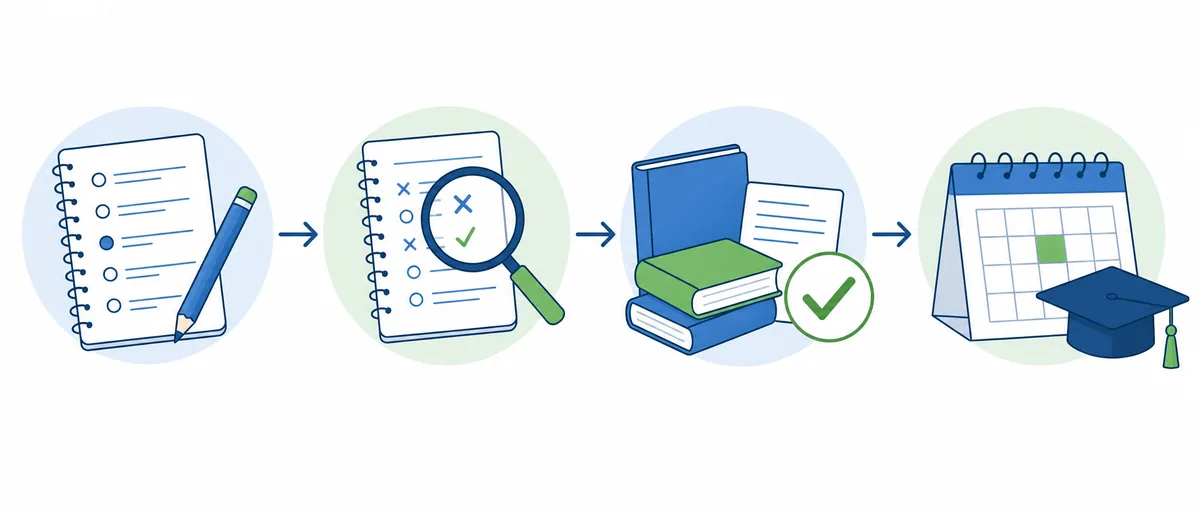
Four-step score review
- Name the subject. Record Math, RLA, Science, or Social Studies instead of only writing down a total percentage.
- Find the repeated mistake. Label it as a content gap, reading error, calculation error, or timing issue.
- Choose one correction. Use a subject practice test, the GED study guide, or a focused resource such as the math formula sheet.
- Retest after review. Compare the same skill under time pressure before deciding that a subject is ready.
GED Score FAQ
Sources to Verify Current GED Score Rules
This guide was checked on August 2, 2026. For the current official score definitions, review the official GED score information before relying on a College Ready or credit-related benefit. Use your state or jurisdiction's GED account and policy pages for scheduling requirements.
Score Range Shortcuts
- 100–144
Review before scheduling. - 145–164
Passing band. - 165–174
College Ready band. - 175–200
College Ready + Credit band.